Back to all posts
Strategy & Methodology3 April 2026

The Complete Guide to Verne Harnish's Scaling Up Methodology for South African Businesses

A proven framework addressing the specific challenges of growing a business in complex, resource-constrained environments like South Africa, based on the 4 Decisions Framework.

ScaleUp Team
The Complete Guide to Verne Harnish's Scaling Up Methodology for South African Businesses

Post

The Complete Guide to Verne Harnish's Scaling Up Methodology for South African Businesses: The Definitive Resource for Sustainable Growth

If you're reading this, chances are you're at that exciting yet terrifying crossroads where your business is growing, but you're starting to feel like you're losing control. Sound familiar? You're not alone – and more importantly, there's a proven way forward that has helped over 102,000 companies worldwide achieve sustainable, profitable growth.

I'm talking about Verne Harnish's Scaling Up methodology, and trust me, it's been a game-changer for thousands of businesses worldwide, including right here in South Africa. Today, I want to walk you through exactly what this methodology is, why it works so well, and how you can start implementing it in your own business to achieve the kind of growth that creates freedom, not chaos.

Who Is Verne Harnish and Why Should You Care?

Before we dive into the methodology itself, let me tell you about the man behind it – because understanding his background will help you appreciate why this approach is so powerful and practical.

Verne Harnish isn't just another business guru throwing around fancy theories. He's one of the founders of the Young Entrepreneurs' Organization (YEO), which later became the Entrepreneurs' Organization (EO) – a global network of over 18,000 business leaders that's helped shape some of the most successful companies in the world. He also founded and chaired EO's premiere CEO program held at MIT for fifteen years, a program where he still teaches today.

But here's what really matters: Verne spent over four decades studying what separates the businesses that successfully scale from those that plateau, struggle, or crash. His research led to the Scaling Up methodology, which is based on the habits and practices of John D. Rockefeller – one of the most successful business builders in history.

Verne is currently the founder and CEO of Scaling Up (formerly Gazelles), a global executive education and coaching company with over 290 partners across six continents. He's also the Global Scaleup Fellow at The Entrepreneurship Center at Harvard. His book "Scaling Up: How a Few Companies Make It...and Why the Rest Don't" has been translated into 26 languages, sold over 675,000 copies globally, and won eight major international book awards including the International Book Award for Best General Business book.

The beauty of this approach? It's not theoretical. It's based on real data from real companies that have successfully navigated the treacherous waters of business growth. Companies like Atlassian (scaled to $10 billion valuation), Coastal.com (sold for CAD$430 million), and Benetton India (became the #1 international fashion brand in India) all credit the Scaling Up methodology for their success. And the best part? It works just as well for a manufacturing company in Durban as it does for a tech startup in Cape Town.

The Reality of Business Growth in South Africa: Why Most Companies Fail to Scale

Let's be honest about something: growing a business in South Africa comes with unique challenges that our counterparts in more developed markets might not face. We're dealing with economic volatility, skills shortages, infrastructure constraints, regulatory complexities, currency fluctuations, and load shedding – all while trying to compete in an increasingly global marketplace.

Here's a sobering statistic that should wake up every South African business owner: research shows that about 70% of South African businesses fail to scale successfully. They either plateau at their current size, struggle with persistent cash flow problems, lose key people to competitors or emigration, or simply burn out trying to manage growth without the right systems in place. Even more concerning, 96% of small businesses in the United States (a much more developed market) remain under $1 million in revenue – imagine how much more challenging it is here in South Africa.

But here's the thing that gives me hope – and should give you hope too: the businesses that do scale successfully aren't necessarily the ones with the best products, the most funding, or the most favorable market conditions. They're the ones with the best systems, processes, and decision-making frameworks. They're the ones that have learned to create predictable, repeatable growth while building organizations that can operate effectively without the founder being involved in every decision.

This is exactly what the Scaling Up methodology provides – a proven framework that addresses the specific challenges of growing a business in complex, resource-constrained environments like South Africa. The methodology was developed by studying companies that succeeded with limited resources, making it perfect for our context where capital efficiency and resource optimization aren't just nice-to-haves – they're essential for survival.

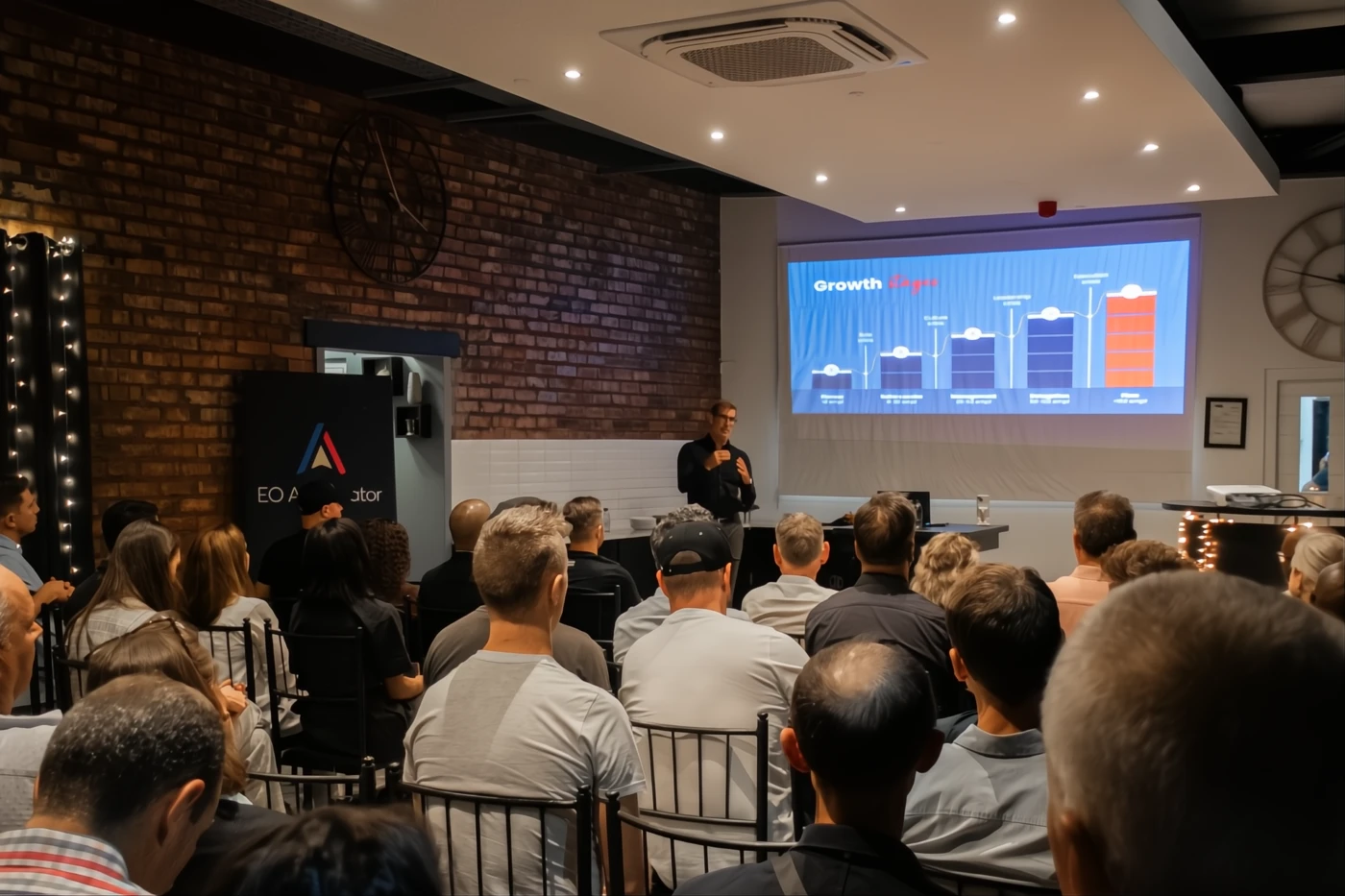
The Five Stages of Business Growth: Where Are You Now?

Before we dive into the methodology itself, it's crucial to understand where your business currently sits in the growth journey. Verne Harnish identifies five distinct stages of business growth, each with its own unique challenges and requirements. Understanding your current stage will help you prioritize which aspects of the Scaling Up methodology to focus on first.

Stage 1: Start-up Phase (1-7 employees)

In this phase, you're primarily focused on validating your customer proposition and business model. The main challenge is proving that people actually want what you're offering and are willing to pay for it. Most of your time is spent refining your product or service and establishing basic processes.

Key challenges: Product-market fit, initial customer acquisition, basic process establishment South African context: Many businesses in this stage struggle with access to funding and mentorship

Stage 2: Rollercoaster Phase (8-25 employees)

This is where things get interesting – and challenging. You're transitioning from being a "doer" to being a manager, and the business starts experiencing the ups and downs that give this phase its name. You're establishing scalable processes while trying to maintain the entrepreneurial spirit that got you started.

Key challenges: Delegation, process standardization, maintaining cultureSouth African context: Skills shortages become apparent, and finding the right people becomes critical

Stage 3: Adolescent Phase (26-50 employees)

Complexity increases significantly in this phase. You need to hire professionals for functional roles and address the growing complexity of managing a larger team. Cash demands increase, and you often need to bring in a second-in-command or strengthen your management team.

Key challenges: Professional management, increased complexity, culture maintenanceSouth African context: Regulatory compliance becomes more complex, and the "war for talent" intensifies

Stage 4: Scale-up Phase (51-150 employees)

This is the critical phase where delegation becomes essential. You can no longer be involved in every decision, and you need to focus on leadership development and talent management. This is where many South African businesses get stuck because they haven't built the systems and processes needed to operate without constant founder involvement.

Key challenges: Leadership development, systems and processes, talent retentionSouth African context: Infrastructure constraints and economic volatility can significantly impact growth

Stage 5: Flow Phase (150+ employees)

In this phase, you're focused on standardizing processes while balancing growth with innovation. You need to maintain the entrepreneurial spirit while building the discipline and systems of a larger organization.

Key challenges: Standardization vs. innovation, maintaining culture at scale, market expansion South African context: Opportunities for regional expansion into other African markets

Common challenges across all phases that are particularly acute in South Africa:

  • Unclear accountability and role definitions
  • Talent attraction and retention in a competitive market
  • Product or service clarity in rapidly changing markets
  • Lack of meaningful KPIs and measurement systems
  • Unclear mission and strategy communication
  • Cash flow management in an volatile economic environment

The Heart of Scaling Up: The 4 Decisions Framework

At its core, the Scaling Up methodology revolves around what Verne calls the "4 Decisions." Think of these as the four critical areas where you, as a business leader, need to make the right choices consistently if you want to scale successfully. Like a table with four legs, all four decisions are equally important – if you're missing one, your business will be wobbly and unstable.

Research conducted by Bill Gross of Idealab confirmed this principle. After analyzing thousands of companies, he found that success isn't determined by having one area perfect while neglecting others. Instead, it's about getting all four decisions right and maintaining balance across them.

1. People: Getting the Right People Doing the Right Things Right

This isn't just about hiring good people – though that's certainly part of it. It's about creating a comprehensive system where you have the right people in the right roles, with clear accountability, and the tools they need to succeed. In the South African context, this is particularly crucial given our skills challenges and the need to develop local talent while competing with international companies for top performers.

The People decision encompasses several critical elements:

Hiring and Onboarding Systems That Ensure You Get A-Players
Most businesses hire based on gut feel and hope for the best. The Scaling Up methodology introduces systematic approaches to hiring that dramatically improve your success rate. This includes developing detailed hiring scorecards, conducting structured interviews, and implementing comprehensive onboarding programs that set new hires up for success from day one.

In South Africa, where skills shortages are common, this systematic approach becomes even more important. You can't afford to make hiring mistakes when good people are hard to find and expensive to replace.

Clear Role Definitions Using Tools Like the Function Accountability Chart (FACe)
One of the most powerful tools in the Scaling Up arsenal is the Function Accountability Chart (FACe). This tool ensures that every facet of your organization has one person assigned with accountability for ensuring goals are met. As Verne says, "If more than one person is accountable, then no one is accountable, and that's when things fall through the cracks."

The FACe tool helps you identify gaps in your organization, clarify responsibilities, and empower people by giving them clear ownership of specific outcomes. Companies that implement this tool often see immediate improvements in execution and accountability.

Performance Management That's Tied to Your Company Values Performance management in the Scaling Up methodology isn't about annual reviews and bureaucratic processes. It's about creating systems where everyone knows whether they're winning or losing on a daily and weekly basis. This includes implementing meaningful KPIs, regular coaching conversations, and linking performance to your core values and purpose.

Leadership Development to Build Bench Strength as You Grow As you scale, you need to develop leaders at every level of your organization. This isn't just about promoting your best performers – it's about systematically developing leadership capabilities throughout your organization so you're not dependent on a few key people.

2. Strategy: Creating a Differentiated Approach That Matters

Strategy in the Scaling Up methodology isn't about having a 50-page business plan that sits on a shelf collecting dust. It's about making clear, executable choices about where you'll compete, how you'll win, and what you won't do. It's about owning a word or phrase in your market and building an unbeatable competitive position around it.

The Scaling Up approach uses the "7 Strata of Strategy" framework to help you build this competitive position:

Defining Your Sandbox – Exactly Who Your Core Customers Are Most businesses try to serve everyone and end up serving no one particularly well. The Scaling Up methodology forces you to get crystal clear about who your core customers are – not just demographically, but psychographically. What do they value? What keeps them awake at night? How do they make decisions?

Articulating Your Brand Promises – What You Commit to Deliver Your brand promises aren't marketing slogans – they're operational commitments that drive every decision in your business. Companies like Domino's ("Pizza delivered in 30 minutes or less, or your next pizza is free") and Amazon ("One-click easy") have built entire business models around their brand promises.

Identifying Your X-Factor – What Gives You a 10x Advantage This isn't about being slightly better than your competition – it's about identifying what makes you fundamentally different and better. What can you do that your competitors simply can't match?

Creating Your One-Phrase Strategy – How You Make Money Differently Can you explain your strategy in one phrase that a 12-year-old could understand? If not, it's probably too complex. The best strategies are simple, memorable, and actionable.

The Power of Owning Words When Verne asks audiences in China, "What company comes to mind when I say 'pizza delivery in 30 minutes or less'?" they immediately answer "Domino's." That's the power of owning words in your market. What words does your company own?

This is especially important in South Africa, where many markets are becoming increasingly competitive and differentiation is crucial for survival and growth.

3. Execution: Flawless Implementation with Minimal Drama

This is where most businesses fall apart, and it's often the biggest challenge for South African companies. You can have the best people and the clearest strategy, but if you can't execute consistently, you won't scale. The Scaling Up methodology introduces what are called the "Rockefeller Habits" – 10 fundamental practices that create what Verne calls "routine sets you free."

These aren't bureaucratic processes designed to slow you down – they're liberating systems that free you up to focus on what matters most by creating predictability and reducing the constant firefighting that plagues most growing businesses.

The 10 Rockefeller Habits:

  1. The Executive Team Is Healthy and Aligned – Your leadership team must be able to engage in constructive conflict and make decisions together
  2. Everyone Is Aligned with the #1 Thing – The entire organization focuses on one critical priority each quarter
  3. Communication Rhythm Is Established – Information moves through the organization quickly via structured meeting rhythms
  4. Every Facet Has Clear Accountability – One person is accountable for every goal, process, and outcome
  5. Ongoing Employee Input Is Collected – Regular feedback loops identify obstacles and opportunities
  6. Customer Feedback Is Tracked Like Financial Data – Customer insights are gathered and analyzed systematically
  7. Core Values and Purpose Are "Alive" – Values guide daily decisions, not just wall decorations
  8. Employees Can Articulate the Strategy – Everyone knows and can explain the company's strategic direction
  9. All Employees Know If They Had a Good Day – Clear metrics help everyone track their performance
  10. Plans and Performance Are Visible – Scoreboards and dashboards make progress transparent to everyone

Meeting Rhythm That Keeps Everyone Aligned The Scaling Up methodology introduces a comprehensive meeting rhythm: daily huddles (5-15 minutes), weekly meetings (60-90 minutes), monthly management meetings (half to full day), and quarterly/annual strategic sessions (1-3 days). This might sound like a lot of meetings, but when done properly, it actually saves time by improving communication and reducing the need for ad-hoc conversations and crisis management.

Quarterly Themes That Focus the Entire Organization Instead of trying to accomplish everything at once, the methodology focuses the entire organization on one critical number or theme each quarter. This creates alignment, momentum, and the ability to celebrate wins regularly.

Clear Accountability with Tools Like "Who, What, When" Every goal, project, and initiative has a clear owner, specific deliverable, and deadline. This eliminates the confusion and finger-pointing that often accompanies growth.

4. Cash: Generating Consistent Cash Flow and Accelerating Growth

Here's something every South African business owner knows intimately: cash flow is king. But the Scaling Up methodology goes beyond just managing cash flow – it's about accelerating it and using cash as a strategic weapon for growth.

The framework introduces the "Power of One" – seven financial levers that can dramatically improve your cash position. Given the economic realities in South Africa, mastering these levers isn't just helpful; it's essential for survival and growth.

The Seven Financial Levers (Power of One):

  1. Price increases
  2. Volume increases
  3. Cost of goods sold reductions
  4. Operating expense reductions
  5. Accounts receivable reductions
  6. Inventory reductions
  7. Accounts payable increases

Cash Conversion Cycle Optimization Your Cash Conversion Cycle (CCC) measures how long it takes to convert your investments in inventory and other resources back into cash. Companies that master their CCC can often double their operating cash flow without increasing sales.

Growth Funding Strategies That Don't Dilute Ownership The methodology emphasizes "customer-funded business" models where your customers help fund your growth. This is particularly relevant in South Africa where access to traditional funding can be challenging.

Financial Visibility Systems for Better Decision-Making You need financial dashboards that give you real-time visibility into your cash position, profitability, and key financial metrics. This isn't just about historical reporting – it's about predictive analytics that help you make better decisions.

Why This Methodology Works So Well for South African Businesses

You might be wondering: "This sounds great in theory, but will it actually work for my business here in South Africa?" The answer is absolutely yes, and here's why the Scaling Up methodology is particularly well-suited to the South African business environment:

It's Built for Resource Constraints

The Scaling Up methodology was developed by studying companies that succeeded without unlimited resources – companies that had to be smart about how they allocated their time, money, and people. This makes it perfect for the South African context, where capital efficiency and resource optimization are critical success factors.

Unlike methodologies developed in Silicon Valley where venture capital is abundant, Scaling Up emphasizes self-funded growth and cash generation. This aligns perfectly with the reality most South African businesses face.

It Emphasizes Systems Over Heroics

Too many South African businesses rely on the founder or a few key people to hold everything together. This creates what Verne calls "founder dependency" – where the business can't operate effectively without constant input from key individuals.

The Scaling Up approach systematically removes these bottlenecks by creating processes and systems that work regardless of who's involved. This is crucial in South Africa where key person risk is often amplified by emigration and skills shortages.

It's Culturally Adaptable

The framework is flexible enough to work within different cultural contexts while maintaining its core principles. Whether you're running a family business in the Eastern Cape, a tech company in Johannesburg, or a manufacturing operation in KwaZulu-Natal, the principles adapt to your specific situation.

The methodology recognizes that culture eats strategy for breakfast, so it provides tools for making your values and culture "alive" in your organization rather than trying to impose a one-size-fits-all approach.

It Focuses on Cash Generation and Self-Funded Growth

Given our economic environment, the methodology's emphasis on cash flow acceleration and self-funded growth is particularly relevant for South African businesses. Rather than relying on external funding that may not be available or may come with unfavorable terms, the methodology shows you how to fund growth from operations.

It Addresses the "War for Talent"

The methodology provides systematic approaches to attracting, hiring, and retaining top talent – crucial capabilities in South Africa's competitive talent market. It also emphasizes developing people internally rather than always hiring from outside, which is often more practical and cost-effective in our market.

Real South African Success Stories: The Methodology in Action

Let me share some examples of how this methodology works in practice, including both local South African implementations and international examples that are directly applicable to our market.

A Cape Town Success Story

I worked with a fast-growing retail company in Cape Town that had reached about R800 million in annual revenue with a team of 190 employees. The leadership team was ambitious but overwhelmed: the CEO was still involved in nearly every major decision, department heads were working long hours, and operational issues were creating bottlenecks that slowed growth.

Although the business had expanded rapidly over its first decade, they had reached a point where further growth created more chaos than opportunity. Every attempt to scale strained their systems, cash flow, and key staff, leading to burnout and inconsistent performance.

We implemented the 4 Decisions framework over an 18-month period:

People Implementation:

  • Created clear role definitions using the FACe tool, which quickly revealed gaps in accountability.

  • Introduced structured hiring with scorecards and a formal onboarding process.

  • Established structured weekly leadership meetings to improve alignment.

  • Invested in leadership development to strengthen the management bench.

Results: Staff turnover dropped by 25%, productivity rose, and the CEO was finally able to step back from day-to-day firefighting.

Strategy Implementation:

  • Applied the 7 Strata of Strategy to sharpen their market positioning.

  • Concentrated on the highest-margin customer segments.

  • Defined strong brand promises, each tied to specific KPIs.

  • Created a clear and memorable elevator pitch that every employee could share.

Results: Revenue started to grow double digits again, and the company began competing successfully against larger, more established rivals.

Execution Implementation:

  • Rolled out the complete meeting rhythm (daily, weekly, monthly, quarterly).

  • Launched quarterly themes that rallied the whole organization around a single priority.

  • Used “Who, What, When” tracking for crystal-clear accountability.

  • Installed visual scoreboards to make progress visible company-wide.

Results: On-time delivery jumped from 70% to 95%, and unplanned crises dropped dramatically.

Cash Implementation:

  • Analyzed the Cash Conversion Cycle to find quick-win improvements.

  • Applied the Power of One to identify specific levers for cash acceleration.

  • Introduced real-time financial dashboards for better decision-making.

  • Negotiated more favorable terms with suppliers and customers.

Results: Freed up over R8 million in working capital and made cash flow far more predictable.

The Overall Result: Within two years, the business had strengthened its operational foundation, improved profitability, and positioned itself for sustainable growth without relying on the CEO’s constant presence. They not only maintained their pace of expansion but did so with more stability, stronger leadership, and the cash reserves to seize new opportunities.

International Examples Applicable to South Africa

Coastal.com (Canada): This eyewear company was acquired for CAD$430 million, making it the largest e-commerce acquisition in Canadian history. They credited their success to disciplined execution of the Rockefeller Habits, particularly their focus on customer feedback and employee input. This example is particularly relevant for South African e-commerce businesses.

The City Bin Co. (Ireland): During Ireland's deep recession in 2009, this waste management company used quarterly themes to survive and thrive. Their "Life Begins at 40" theme focused the entire organization on increasing monthly earnings by €40,000 through either recurring revenue or cost savings. This example shows how the methodology works in challenging economic conditions similar to what many South African businesses face.

Proof (USA): This social proof marketing platform was built from the ground up using Scaling Up principles. The founders credit the methodology with helping them scale to over $1 billion in valuation while maintaining their sanity and avoiding the typical startup chaos. Their focus on the 4 Decisions from day one allowed them to scale efficiently and effectively.


Common Mistakes to Avoid: Lessons from the Trenches

Having helped dozens of South African businesses implement this methodology, I've seen some common pitfalls that can derail your progress. Here's what to watch out for:

Trying to Do Everything at Once

The methodology is comprehensive, but that doesn't mean you should implement everything simultaneously. This is probably the most common mistake I see. Entrepreneurs are naturally impatient and want to see results quickly, so they try to implement all four decisions and all ten Rockefeller Habits at once.

The result? Overwhelm, confusion, and ultimately abandoning the methodology because it feels too complex.

The Solution: Start with the basics – daily huddles and the One-Page Strategic Plan – and build from there. Focus on one or two habits per quarter. Remember, this is a marathon, not a sprint.

Underestimating the Cultural Change Required

This isn't just about new processes and tools; it's about fundamentally changing how your organization thinks and operates. Many South African businesses have operated informally for years, relying on personal relationships and informal communication.

The Scaling Up methodology introduces discipline and structure that can feel foreign initially. Some team members may resist the change, viewing it as unnecessary bureaucracy.

The Solution: Communicate the "why" behind every change. Help people understand how these systems will make their jobs easier and the company more successful. Give people time to adapt and be patient with the learning curve.

Focusing on Tools Instead of Principles

The tools are important, but they're just vehicles for the underlying principles. I've seen companies get so caught up in perfecting the templates and formats that they lose sight of the bigger picture.

For example, they'll spend weeks debating the exact format of their One-Page Strategic Plan instead of focusing on the strategic clarity it's supposed to create.

The Solution: Remember that the tools are means to an end, not the end itself. Focus on the outcomes you're trying to achieve, and use the tools to get there.

Not Adapting to Local Context

While the principles are universal, the implementation needs to fit your specific situation. A family business in Bloemfontein will implement these differently than a tech startup in Cape Town, and that's perfectly fine.

I've seen companies try to copy implementations from other businesses without considering their own culture, industry, or market conditions.

The Solution: Use the principles as your guide, but adapt the implementation to fit your specific context. What matters is that you're making progress on the four decisions, not that you're doing everything exactly like another company.

Lack of Leadership Commitment

The methodology requires consistent leadership commitment over time. It's not something you can delegate to your HR manager or operations team and expect to work.

I've seen implementations fail because the CEO or founder wasn't fully committed to the process, sending mixed signals to the organization about its importance.

The Solution: Leadership must model the behaviors they want to see. If you want your team to participate in daily huddles, you need to be there consistently. If you want them to track metrics, you need to be tracking and discussing metrics regularly.

Expecting Immediate Results

While some benefits (like improved communication from daily huddles) can be seen quickly, the full benefits of the methodology typically take 12-18 months to materialize. Many businesses give up too early because they don't see dramatic changes in the first few months.

The Solution: Set realistic expectations and celebrate small wins along the way. Track your progress on implementing the habits and systems, not just business results.

The Role of Leadership in Scaling Up: Your Evolution as a Leader

Here's something crucial that often gets overlooked: as the business owner or CEO, your role needs to evolve dramatically as you implement this methodology. You can't keep doing everything the same way and expect different results.

From Doer to Leader

In the early stages of your business, you were probably involved in everything – sales, operations, finance, HR, and strategy. This hands-on approach was necessary and probably contributed to your early success.

But as you scale, this approach becomes a liability. You become the bottleneck that prevents your business from growing. The Scaling Up methodology will help you transition from being the person who does everything to being the person who ensures everything gets done.

From Hero to Coach

Many South African entrepreneurs pride themselves on being the hero who saves the day when things go wrong. While this might feel good in the short term, it creates a culture of dependency where people wait for you to solve problems instead of solving them themselves.

The methodology helps you transition from being the hero to being the coach who develops other people's problem-solving capabilities.

From Firefighter to Architect

When you're constantly firefighting, you're reactive rather than proactive. You're dealing with problems after they occur rather than building systems that prevent them from occurring in the first place.

The Scaling Up methodology helps you become the architect of systems and processes that prevent problems and create predictable outcomes.

The Emotional Journey

This transition isn't just intellectual – it's deeply emotional. Many entrepreneurs struggle with letting go of control, even when they intellectually understand it's necessary for growth.

You might feel like you're losing touch with the business or that things aren't being done "the right way" (meaning your way). This is normal and part of the process.

The key is to remember that your goal isn't to maintain control over everything – it's to create a business that achieves your vision and gives you the freedom you originally sought when you started the business.

Measuring Success: What to Expect and When

So, what kind of results can you realistically expect from implementing the Scaling Up methodology? Based on research from companies that have used these tools, as well as my own experience with South African businesses, here's what you can typically expect:

Short-Term Results (3-6 months)

  • Improved communication and alignment through daily huddles and meeting rhythms
  • Reduced firefighting as issues are identified and addressed more quickly
  • Better cash flow visibility through improved financial tracking
  • Increased employee engagement as people understand their roles and the company direction more clearly

Medium-Term Results (6-18 months)

  • Revenue growth of 20-50% annually (compared to pre-implementation baseline)
  • Profit margin improvements of 3-7 percentage points
  • Cash flow acceleration of 30-60 days improvement in cash conversion cycle
  • Reduced management time of up to 20-30 hours per week for senior leaders
  • Improved employee retention as culture and systems improve

Long-Term Results (18+ months)

  • Sustainable, predictable growth that doesn't require constant founder involvement
  • Scalable systems and processes that can handle 2-3x current volume
  • Strong leadership bench with people capable of running major parts of the business
  • Market leadership position in your chosen niche or geography
  • Significant business valuation increases (many companies see 3-10x valuation improvements)

Important Caveats

These results don't happen overnight, and they're not guaranteed. Success depends on several factors:

  • Consistent implementation over time
  • Leadership commitment to the process
  • Market conditions and external factors
  • Starting point of your business
  • Quality of execution in implementing the methodology

It typically takes 12-18 months to see significant improvements, and 2-3 years to fully realize the methodology's potential. This is why it's crucial to view this as a long-term commitment, not a quick fix.

Advanced Implementation: Taking It to the Next Level

Once you've mastered the basics of the Scaling Up methodology, there are several advanced concepts and tools that can help you take your implementation to the next level:

The Power of Peer Learning

One of the most powerful accelerators of the Scaling Up methodology is learning from other business leaders who are on the same journey. This is why organizations like EO (Entrepreneurs' Organization) and similar peer groups are so valuable.

Consider joining or forming a peer group of business leaders who are also implementing Scaling Up. The shared learning, accountability, and support can dramatically accelerate your progress.

Advanced Cash Management

Beyond the basic Cash Acceleration Strategies, there are advanced financial techniques that can further improve your cash position:

  • Dynamic pricing strategies that optimize for both volume and margin
  • Advanced inventory management using just-in-time principles
  • Customer financing programs that accelerate cash collection
  • Strategic partnerships that reduce capital requirements

Technology Integration

While the Scaling Up methodology isn't dependent on technology, the right tools can significantly enhance your implementation:

  • Dashboard and analytics tools for real-time visibility into key metrics
  • Project management systems for tracking quarterly themes and priorities
  • Communication platforms that support your meeting rhythms
  • Financial management systems that provide better cash flow visibility

International Expansion

For South African businesses ready to expand beyond our borders, the Scaling Up methodology provides an excellent framework for international growth:

  • Replicating systems and processes in new markets
  • Maintaining culture and values across geographic boundaries
  • Managing complexity as you operate in multiple jurisdictions
  • Building local leadership in new markets

Your Next Steps: Getting Started Today

If you've made it this far, you're clearly serious about scaling your business. Here's exactly what I recommend you do next to begin your Scaling Up journey:

Immediate Actions (This Week)

1. Complete the 4 Decisions Assessment Download the assessment tool and honestly evaluate where your business stands in each of the four decision areas. This will help you identify your biggest priorities and create a baseline for measuring progress.

2. Start Daily Huddles Tomorrow Don't wait for the perfect format or system. Start with a simple 15-minute daily meeting with your core team. Focus on three questions: What's up? What are you stuck on? What are your priorities today?

3. Calculate Your Cash Conversion Cycle Figure out how long it currently takes to convert your investments in inventory and other resources back into cash. This single metric can reveal enormous opportunities for improvement.

First Month Actions

4. Create Your One-Page Strategic Plan Use the OPSP template to get your strategy down on one page. Don't worry about perfection – focus on clarity and getting everyone aligned in the same direction.

5. Identify Your Top 3 Priorities What are the three most important things your business needs to accomplish in the next 90 days? Make sure everyone in your organization knows and understands these priorities.

6. Begin Tracking Key Metrics Identify 3-5 key metrics that indicate whether your business is healthy and growing. Start tracking these weekly and sharing them with your team.

First Quarter Actions

7. Implement Your First Quarterly Theme Choose one critical number or theme that will focus your entire organization for the next 90 days. Make it measurable, achievable, and meaningful.

8. Create Function Accountability Charts Map out who is accountable for what in your organization. Identify gaps where no one is clearly responsible for important outcomes.

9. Establish Your Meeting Rhythm Add weekly team meetings to your daily huddles. Plan your first monthly management meeting and quarterly strategic session.

Getting Support and Acceleration

10. Consider Professional Coaching While you can implement much of this methodology on your own, having experienced guidance can accelerate your progress and help you avoid common pitfalls. Look for certified Scaling Up coaches who understand the South African business environment.

11. Join a Peer Group Connect with other business leaders who are on the same journey. The shared learning, accountability, and support can be invaluable.

12. Invest in Your Team's Education Consider bringing your entire leadership team through Scaling Up training together. When everyone understands the methodology and speaks the same language, implementation becomes much easier.

Comprehensive FAQ: Everything You Need to Know About Scaling Up

Based on thousands of questions from business owners around the world, here are the most common questions about the Scaling Up methodology, with detailed answers that will help you understand and implement these concepts effectively.

Getting Started Questions

Q: How often does the One-Page Strategic Plan (OPSP) need updating?

A: At least annually, but quarterly is the usual rhythm for most growing businesses. The frequency depends on your growth rate:

  • If you're growing single digits annually, annual updates may be sufficient
  • If you're growing 10-15% annually, quarterly updates are recommended
  • If you're growing 50-100% annually, you should review and update every two months

The key is that your strategic plan should remain relevant and actionable. In South Africa's dynamic business environment, quarterly reviews help you adapt to changing market conditions while maintaining strategic focus.

Q: How do you determine where to start with the scaling up process?

A: Focus on the four main areas: People, Strategy, Execution, and Cash. Start by identifying your most pressing issue:

  • If you're about to run out of cash, prioritize Cash decisions immediately
  • If you have key people problems or gaps, address People first
  • If your team lacks direction or focus, start with Strategy
  • If you have good people and strategy but poor execution, focus on the Rockefeller Habits

The best approach is to complete the 4 Decisions Assessment with your team to identify which area needs the most immediate attention. Remember, like a table with four legs, all areas are important, but you may need to stabilize one leg before the others.

Q: I want to scale up but I don't feel like I'm ready. What should I do?

A: This is a common concern, but here's the reality: there's no "in-between" stage between startup and scale-up. You either commit to scaling or accept staying small. Research shows that 96% of small businesses remain under $1 million in revenue because they never make this commitment.

If you're experiencing 10-20% annual growth or more, you're ready to start implementing Scaling Up principles. The methodology will help you get ready by building the systems and capabilities you need.

Start by:

  • Assessing the four key areas (People, Strategy, Execution, Cash)
  • Identifying your biggest gaps
  • Beginning with simple habits like daily huddles
  • Building confidence through small wins

Q: How do you know when your company is ready to scale?

A: There are three key indicators:

  1. Market demand: If you have more people wanting your product/service than you can handle, and you're struggling to keep up, it's time to scale. Not scaling means leaving money on the table or burning out your team.

  2. Mental preparation: You and your leadership team must be mentally prepared for the additional challenges that come with scaling, including increased complexity, more people management, and higher stakes decisions.

  3. Foundation assessment: Examine the four areas (People, Strategy, Execution, Cash). You don't need to be perfect in all areas, but you need basic competency and a commitment to improving systematically.

Q: How do you scale up without burning out?

A: This is exactly why the Scaling Up methodology was created. The core principle is "routine sets you free" – by implementing disciplined systems and processes, you reduce the chaos and firefighting that leads to burnout.

Key strategies include:

  • Implementing the Rockefeller Habits to create predictable routines
  • Building systems that work without your constant involvement
  • Delegating effectively using tools like the Function Accountability Chart
  • Focusing on one priority at a time through quarterly themes
  • Creating clear accountability so you're not responsible for everything

Many leaders report reducing their work hours by 20-30 hours per week while achieving better business results after implementing these systems.

People and Culture Questions

Q: How do we create a performance culture to drive growth?

A: A performance culture starts with the 10 Rockefeller Habits, which act like a thermostat for your organization. Without these systems, your company is like a heating system without controls – it wastes energy, creates discomfort, and produces poor results.

Key elements include:

  • Clear accountability for every role and outcome
  • Regular feedback loops with employees and customers
  • Meaningful metrics that help people know if they're winning
  • Core values that are "alive" and guide daily decisions
  • Transparent communication about company performance and direction

The goal is to create an environment where people can succeed, know when they're succeeding, and feel connected to something meaningful.

Q: How do you get your business partner to buy into the scaling up methods?

A: Rather than overwhelming them with the entire book, start strategically:

  1. Begin with key chapters: Have them read the "Barriers" chapter first – it's engaging and explains the challenges of scaling
  2. Share the "Core" chapter: This covers the fundamental concepts
  3. Focus on execution: If they want more, share the execution section with the Rockefeller Habits
  4. Start small: Implement one or two simple practices like daily huddles to demonstrate value
  5. Share success stories: Use examples from other businesses that resonate with your situation

The key is to make it less daunting and more practical by showing immediate value rather than theoretical concepts.

Execution and Operations Questions

Q: Should daily huddles be more relaxed or speedy?

A: Daily huddles should align with your company culture, but they should always be focused and time-bounded:

  • Duration: Maximum 15 minutes, with each person taking no more than 1 minute
  • Format: Fast-paced if you have a high-energy culture, more relaxed if that fits your style
  • Content: Focus on three key questions: What's up? What are you stuck on? What are your priorities today?
  • Consistency: Same time, same place (or virtual location), every day

Initially, it might feel rushed as people learn to be concise, but once everyone gets the rhythm, it becomes natural and efficient. To outsiders, it might look like a horse race, but to participants, it's a comfortable, productive pace.

Q: What's the number one thing that blocks companies from scaling up?

A: There isn't just one thing – that's why the methodology focuses on four key decisions. Research by Bill Gross of Idealab confirmed that it's like a table with four legs: People, Strategy, Execution, and Cash. All four are equally important, and if you're missing one, your business will be unstable.

However, if I had to identify the most common blocking factors in South Africa specifically:

  • Execution problems: Having good people and strategy but poor systems and processes
  • Cash flow management: Not understanding or optimizing the cash conversion cycle
  • Founder dependency: The business can't operate without constant founder involvement
  • Lack of clear accountability: No one knows who's responsible for what

Q: How do you create good metrics and KPIs?

A: Creating effective metrics requires a "Moneyball" approach – finding the statistics that actually correlate with success, not just the obvious ones.

Steps to create good metrics:

  1. Look for correlations: Use data analysis to find unexpected relationships (like the call center that discovered lower quality scores actually correlated with higher customer retention)
  2. Focus laser-like: Once you find the right metric, drive relentlessly on that single statistic
  3. Make them predictive: Good metrics help you predict future performance, not just report past results
  4. Ensure they're actionable: People should be able to influence the metric through their daily actions
  5. Keep them simple: If people can't understand or remember the metric, it won't drive behavior

The goal is to find 1-2 key metrics that, when improved, drive overall business performance.

Strategy and Growth Questions

Q: How do you own words in your market like Domino's owns "30 minutes or less"?

A: Owning words in your market is about creating a simple, memorable brand promise that differentiates you from competitors:

  1. Identify your unique value: What do you do better than anyone else?
  2. Make it customer-focused: Frame it in terms of customer benefits, not company features
  3. Keep it simple: It should be something a 12-year-old can understand and remember
  4. Make it operational: Your entire business model should support delivering on this promise
  5. Be consistent: Use these words in all your marketing, sales, and internal communications

Examples:

  • Domino's: "30 minutes or less"
  • Amazon: "One-click easy"
  • IKEA: "Flat-packed"
  • FastCat (Philippines): "FerrySafe, FerryFast, FerryConvenient"

The key is that these aren't just marketing slogans – they're operational commitments that drive every business decision.

Q: Is it possible to scale up a business with seasonal swings?

A: Absolutely! Seasonal businesses can actually have advantages in scaling:

Advantages of seasonal businesses:

  • Preparation time: You can spend off-seasons preparing, planning, and improving systems
  • Focused execution: Intense periods require disciplined execution, which builds strong operational capabilities
  • Cash flow benefits: You can generate a year's worth of revenue in a shorter period
  • Team development: Off-seasons provide time for training and development

Strategies for seasonal scaling:

  • Use off-seasons for system development and team training
  • Consider acquiring counter-cyclical businesses to smooth cash flow
  • Build strong cash management systems to handle seasonal variations
  • Embrace the cycle rather than fighting it – many seasonal business owners enjoy the rhythm

Some of the most successful scaled businesses are seasonal – they just learn to work with their natural rhythm rather than against it.

Cash and Financial Questions

Q: What is the Cash Conversion Cycle and why is it so important?

A: The Cash Conversion Cycle (CCC) measures how long it takes to convert your investments in inventory and other resources back into cash. It's calculated as:

CCC = Days Inventory Outstanding + Days Sales Outstanding - Days Payable Outstanding

This metric is crucial because:

  • Cash flow impact: Reducing your CCC by even a few days can free up significant cash
  • Growth funding: A shorter CCC means you need less external funding to grow
  • Competitive advantage: Companies with shorter CCCs can reinvest in growth faster than competitors
  • Risk reduction: Less cash tied up in operations reduces financial risk

Example: If you can reduce your CCC from 60 days to 30 days on R10 million in annual revenue, you free up approximately R800,000 in cash that can be reinvested in growth.

Q: What are the seven financial levers (Power of One) and how do they work?

A: The Power of One identifies seven levers that can dramatically improve your cash flow and profitability:

  1. Price increases: Often the most powerful lever – a 1% price increase can improve profits by 8-25%
  2. Volume increases: Growing sales while maintaining margins
  3. Cost of goods sold reductions: Improving supplier terms, reducing waste, increasing efficiency
  4. Operating expense reductions: Eliminating non-essential costs, improving productivity
  5. Accounts receivable reductions: Getting paid faster by customers
  6. Inventory reductions: Carrying less stock while maintaining service levels
  7. Accounts payable increases: Negotiating better payment terms with suppliers

The power comes from working on all seven levers simultaneously rather than focusing on just one. Small improvements across all levers can create dramatic overall improvements in cash flow and profitability.

Implementation and Timeline Questions

Q: How long does it take to see results from implementing Scaling Up?

A: Results vary by area and depend on your starting point, but here's a typical timeline:

Immediate (1-4 weeks):

  • Improved communication from daily huddles
  • Better awareness of daily priorities and obstacles
  • Increased team alignment and engagement

Short-term (1-6 months):

  • Reduced firefighting and crisis management
  • Better cash flow visibility and control
  • Improved accountability and follow-through

Medium-term (6-18 months):

  • Significant revenue growth (typically 20-50% annually)
  • Improved profit margins (3-7 percentage points)
  • Reduced management time (20-30 hours per week)
  • Better employee retention and engagement

Long-term (18+ months):

  • Sustainable, predictable growth systems
  • Strong leadership bench and reduced founder dependency
  • Market leadership position in chosen niche
  • Significant business valuation increases (often 3-10x)

The key is to focus on implementing the systems consistently rather than expecting immediate business results. The systems create the foundation for sustainable results.

Q: What's the biggest mistake companies make when implementing Scaling Up?

A: The biggest mistake is trying to implement everything at once. The methodology is comprehensive, which can be overwhelming, leading to:

  • Analysis paralysis: Spending too much time planning and not enough time doing
  • Team overwhelm: Introducing too many changes simultaneously
  • Inconsistent execution: Starting multiple initiatives but not completing any
  • Loss of momentum: Getting discouraged when results don't come immediately

The solution: Start with 1-2 simple practices (like daily huddles and the One-Page Strategic Plan) and build from there. Focus on one Rockefeller Habit per quarter. Remember, this is a marathon, not a sprint.

Q: Do I need to hire a coach or can I implement this myself?

A: You can implement much of the methodology yourself using the books, tools, and resources available. However, professional coaching can significantly accelerate your progress and help you avoid common pitfalls.

Benefits of coaching:

  • Faster implementation: Coaches help you prioritize and sequence changes effectively
  • Avoid mistakes: They've seen common pitfalls and can help you navigate around them
  • Accountability: Regular coaching sessions keep you focused and on track
  • Customization: They help adapt the methodology to your specific situation
  • Team alignment: External coaches can help get everyone on the same page

When coaching is most valuable:

  • You're implementing across multiple locations or divisions
  • You have a complex organizational structure
  • Your leadership team has different perspectives on priorities
  • You want to accelerate the timeline for results
  • You're facing significant resistance to change

South African Specific Questions

Q: How does the methodology work in the South African business environment with our unique challenges?

A: The Scaling Up methodology is particularly well-suited to South African businesses because:

Resource constraints: The methodology was developed by studying companies that succeeded without unlimited resources, making it perfect for our capital-constrained environment.

Skills shortages: The systematic approach to hiring, developing, and retaining people helps address our talent challenges.

Economic volatility: The focus on cash flow management and self-funded growth is crucial in our economic environment.

Infrastructure challenges: The emphasis on systems and processes helps businesses operate effectively despite infrastructure constraints.

Regulatory complexity: Clear accountability and systematic processes help manage compliance requirements.

Specific adaptations for South Africa:

  • Focus heavily on cash flow management given economic volatility
  • Emphasize internal talent development due to skills shortages
  • Build strong financial controls and visibility systems
  • Create robust communication systems to manage distributed teams
  • Develop local leadership to reduce dependency on expatriate talent

Q: How do I handle load shedding and infrastructure challenges while implementing Scaling Up?

A: Infrastructure challenges like load shedding actually make the Scaling Up methodology more important, not less:

Planning and preparation: Use the quarterly planning process to anticipate and prepare for infrastructure disruptions.

Communication systems: Robust meeting rhythms and communication systems help coordinate during disruptions.

Clear accountability: When systems are down, clear accountability ensures people know what to do without constant direction.

Cash flow management: Strong cash flow systems help you invest in backup power and other infrastructure solutions.

Specific strategies:

  • Build infrastructure considerations into your quarterly themes
  • Use mobile and cloud-based systems that work during outages
  • Develop contingency plans as part of your execution systems
  • Factor infrastructure costs into your cash flow planning
  • Use daily huddles to coordinate responses to disruptions

Q: How do I compete with international companies for talent while implementing Scaling Up?

A: The Scaling Up methodology actually helps you compete more effectively for talent:

Clear career development: The systematic approach to leadership development shows people a clear path for growth.

Strong culture: Making your values "alive" creates a compelling work environment that goes beyond just compensation.

Meaningful work: Clear purpose and strategy help people understand how their work contributes to something bigger.

Growth opportunities: Scaling businesses create more advancement opportunities than static ones.

Better management: The Rockefeller Habits create better management practices, making your company a more attractive place to work.

Specific strategies:

  • Use the methodology to create a compelling employee value proposition
  • Develop internal talent rather than always hiring externally
  • Create equity or profit-sharing programs using the cash acceleration strategies
  • Build strong onboarding and development programs
  • Focus on total compensation, not just salary

Advanced Implementation Questions

Q: How do I maintain company culture while scaling rapidly?

A: Maintaining culture during rapid scaling is one of the biggest challenges, but the Scaling Up methodology provides specific tools:

Make values "alive": Don't just post values on the wall – integrate them into hiring, performance reviews, recognition, and daily decisions.

Systematic onboarding: Create comprehensive onboarding programs that immerse new hires in your culture from day one.

Leadership development: Develop leaders at every level who can model and reinforce your culture.

Communication systems: Use your meeting rhythms to consistently communicate and reinforce cultural messages.

Measurement: Track culture through employee engagement surveys, retention rates, and cultural indicators.

Specific tactics:

  • Include cultural fit in your hiring scorecards
  • Tell stories that illustrate your values in action
  • Recognize and celebrate behaviors that exemplify your culture
  • Address cultural violations quickly and consistently
  • Use quarterly themes to reinforce cultural priorities

Q: How do I implement Scaling Up across multiple locations or divisions?

A: Multi-location implementation requires careful planning and sequencing:

Start with headquarters: Perfect the methodology at your main location before rolling out to others.

Develop local champions: Identify and train local leaders who can drive implementation in each location.

Adapt to local context: While principles remain consistent, implementation may vary based on local culture, regulations, and market conditions.

Use technology: Leverage video conferencing and collaboration tools to maintain connection and consistency.

Regular communication: Extend your meeting rhythms to include multi-location coordination.

Specific strategies:

  • Create a "playbook" documenting your implementation approach
  • Use the same tools and templates across all locations
  • Rotate leadership between locations to share best practices
  • Measure and compare performance across locations
  • Celebrate successes and share learnings across the network

Q: How do I know if the methodology is working for my business?

A: Track both leading indicators (implementation of systems) and lagging indicators (business results):

Leading indicators (systems implementation):

  • Percentage of Rockefeller Habits consistently implemented
  • Attendance and quality of daily huddles and weekly meetings
  • Completion rate of quarterly priorities
  • Employee engagement and understanding of strategy
  • Quality of accountability and follow-through

Lagging indicators (business results):

  • Revenue growth rates
  • Profit margin improvements
  • Cash flow and cash conversion cycle improvements
  • Employee retention and satisfaction
  • Customer satisfaction and retention
  • Management time savings

Red flags that indicate problems:

  • Inconsistent meeting attendance or quality
  • Quarterly priorities consistently missed
  • Lack of employee engagement with the process
  • No improvement in business metrics after 6-12 months
  • Resistance from key team members

The key is to track both types of indicators and address system problems before they impact business results.

The Bottom Line: Your Path to Sustainable Growth

Look, scaling a business is hard. Scaling a business in South Africa, with all our unique challenges, is even harder. But it's absolutely possible, and the Scaling Up methodology gives you a proven roadmap to get there.

The businesses that will thrive in the coming years won't necessarily be the ones with the best products, the most funding, or the most favorable market conditions. They'll be the ones with the best systems, the clearest strategies, the most disciplined execution, and the strongest cash management. In other words, they'll be the ones that have mastered the 4 Decisions.

You've already taken the first step by educating yourself about what's possible. Now it's time to take action. Your future self – and your business – will thank you for it.

Remember, every successful business was once where you are now. The difference is that they made the decision to implement proven systems and stick with them consistently over time. The question is: are you ready to make that decision too?

The methodology has helped over 102,000 companies worldwide achieve sustainable growth. Companies like Coastal.com (sold for CAD$430 million), Atlassian (scaled to $10 billion valuation), and hundreds of South African businesses have used these principles to create the kind of growth that generates freedom, not chaos.

The tools are available. The methodology is proven. The only question remaining is whether you'll commit to implementing it consistently over time.

Start small. Start today. But most importantly, start.

Ready to get started with the Scaling Up methodology? Download our free One-Page Strategic Plan template and begin your scaling journey today. And if you'd like to discuss how this methodology could work specifically for your business, I'd love to chat. After all, we're all in this together, and there's nothing I enjoy more than seeing a fellow South African business owner succeed.

What's your biggest challenge in scaling your business? Drop me a comment below – I read every single one and often respond personally.

About the Author: This guide was created by the team at ScaleUp, South Africa. We've helped many businesses across South Africa implement these proven systems and achieve sustainable growth. Our team of certified coaches understands the unique challenges of scaling businesses in the South African market and can help you adapt these global best practices to your local context.

Keywords: Verne Harnish scaling up methodology, scaling up book Verne Harnish, business scaling methodology South Africa, scaling up principles for SMEs, Verne Harnish business growth framework, business growth South Africa, SME scaling strategies, 4 decisions framework, Rockefeller habits implementation, one-page strategic plan, business execution framework, cash flow optimization, leadership development South Africa, scaling up FAQ, business growth questions, Verne Harnish methodology explained, scaling up implementation guide, South African business scaling, sustainable business growth, business systems and processes

scaleupsouth africaverne harnishgrowthstrategy

Ready to tackle these challenges?

Let's have a conversation about where you are and where you want to go.

Book a Conversation